
Kids who grow up near Yosemite National Park know important things about the outdoors. They know why you don’t feed the animals. They know what happens when a campfire isn’t fully out. Ask them how they know, and the answer is always the same: someone taught them when they were young, and it stuck.
That’s the goal when you teach Leave No Trace to children. Not compliance, but an understanding. The 7 Principles aren’t rules. They’re a framework for making good decisions outdoors, and kids are fully capable of getting that distinction when the teaching actually meets them where they are.
The programs that do it well share a few common traits. Here’s what we’ve found that works best.
Start with movement, not a lecture
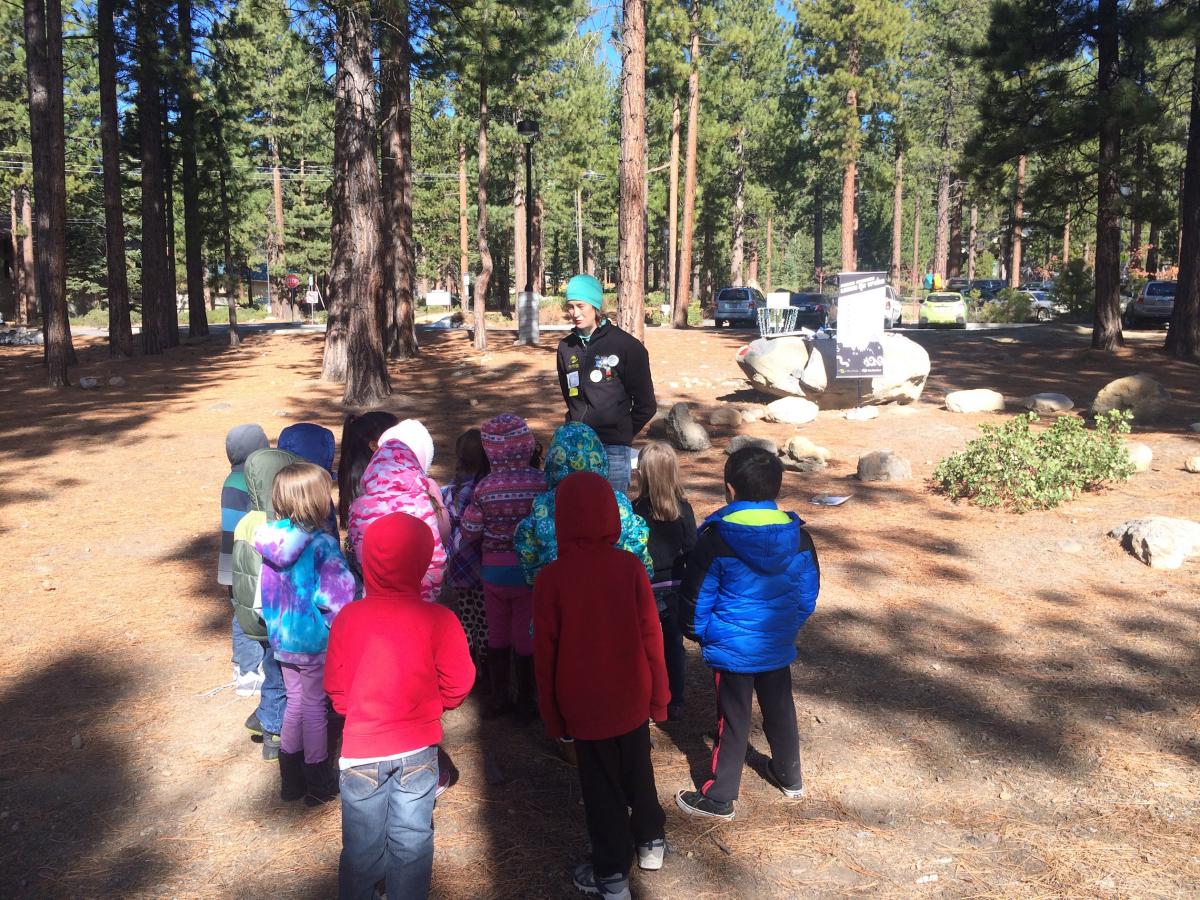
Leave No Trace Traveling Teams have taught the 7 Principles to thousands of kids across the country, from preschoolers in Nevada to fifth graders living inside Yosemite. The consistent finding is that the sessions that land are the ones built around activity. The ones that don’t are the ones where a teacher talks at students for 45 minutes.
A few formats that consistently work:
Progressive walk-throughs. Cover one principle per activity, in order, so kids build understanding incrementally rather than getting all seven dropped on them at once. By the time you reach Respect Wildlife, they’ve already internalized Plan Ahead and Prepare, and you can continue to connect the principles.
Relay races. Use cards listing gear and pack items, and have kids race to match them to the correct principle. This works especially well for Plan Ahead and Prepare with older elementary students. It’s fast, competitive, and actually teaches something.
Simulated hikes. Walk kids through a mock outdoor scenario in which they make decisions at each “stop.” Do we cross the meadow or stick to the trail? Where do we set up camp? What do we do with this fire ring? Real decisions, low stakes, high retention.
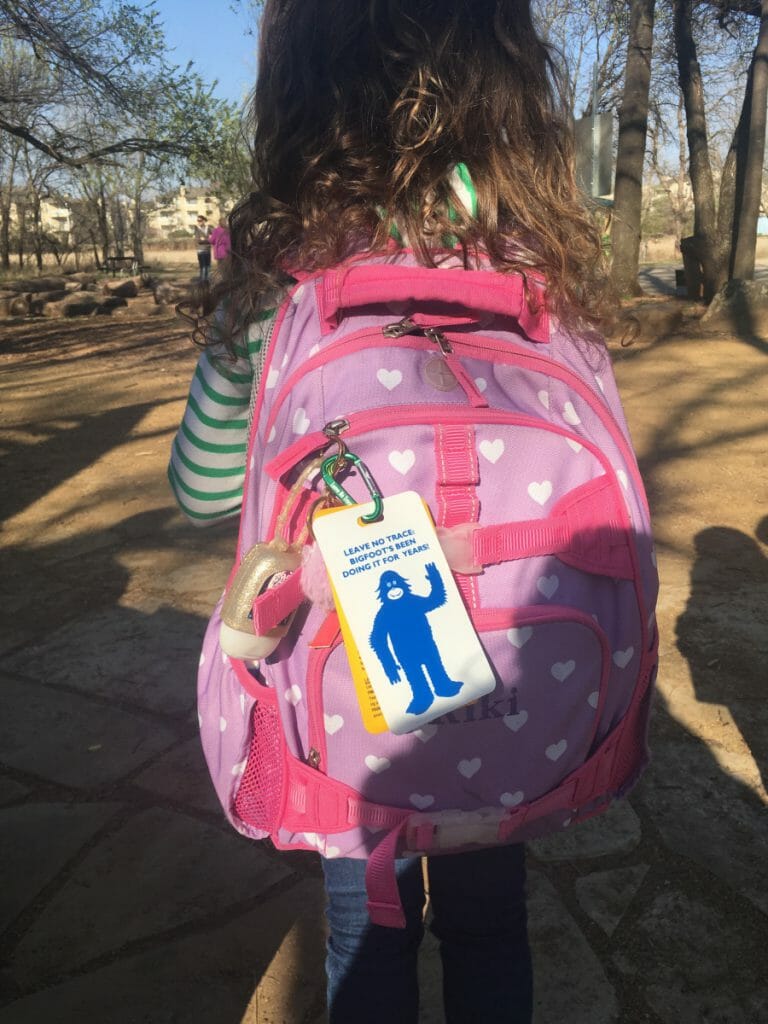
Bigfoot Says. It’s Simon Says, but tied to the principles. Call out a Leave No Trace behavior, kids act it out, or freeze if it violates a principle. Works across a wide age range and maintains high energy.
Let the principles drive the game, not the other way around
Each of the 7 Principles lends itself to a specific type of activity. Don’t force a game onto a principle; instead, find the one that makes the concept click.
Plan Ahead and Prepare works well with sorting and matching games. Give kids gear cards and signs labeled with each principle. Their job is to match what they’d bring to what they’d use it for.
Travel and Camp on Durable Surfaces is all about decision-making. Use cards with images of different “surfaces” kids may encounter (or the real thing if you have access to an outdoor space) and ask if they think each surface is durable or not durable and why. Having them explain their why helps them think through the decision-making process.
Dispose of Waste Properly is a natural fit for one of Leave No Trace’s most popular activities, Trash Timeline. Have kids line up common litter items in order of how long they think they would take to decompose. By sharing the estimated decomposition rates, kids understand not just how to pack it in, pack it out, but why.
Leave What You Find almost always generates the best discussion. One classic question from a student: “If there are a thousand wildflowers, wouldn’t it be okay to pick just one?” That’s a genuine ethical question, and it deserves a real answer, not a rule. Explain that the principles are guidelines, not laws, and walk through cumulative impact: if everyone who passed through that meadow picked one flower, what would be left? Kids get this faster than adults expect.
Minimize Campfire Impacts pairs well with the Ok/No Way game (more on that below).
Respect Wildlife is the most visceral one to teach. Have kids chase each other in an open space, with one group acting as hikers moving through the habitat and the other as animals trying to find food or shelter. When “hikers” repeatedly crowd “animals” out of their space, the impact becomes obvious quickly.
Be Considerate of Others also fits the Ok/No Way format well, and generates real conversation about shared spaces, noise, and trail etiquette.
Use Ok/No Way for principles that are judgment calls
Ok/No Way is one of the most versatile Leave No Trace teaching tools you’ll find. Give kids a scenario, such as building a campfire in a fire-ban area, carving initials into a tree, or throwing food scraps into the woods. And they call it “Ok or No Way”?
It works especially well for Be Careful with Fire, Leave What You Find, and Be Considerate of Others, because those principles involve the most nuance. Some things are context-dependent. Ok/No Way lets you surface that complexity without turning it into a lecture.
Age-appropriate adjustments
Preschool and K–2 students need shorter loops, simpler scenarios, and more physical activity. Bigfoot Says and the wildlife simulation works well here. Keep the vocabulary simple and focus on just two or three principles per session rather than all seven.
Grades 3–5 can handle the full seven and start connecting principles to one another. Relay races, Ok/No Way, and simulated hikes all land at this age. Introduce the concept of cumulative impact, that one person’s choice matters less than what happens when thousands of people make the same choice.
Middle school students can go deeper. The wildflower question, the social media and stewardship angle, discussions about public lands, and what happens when too many people visit the same places. All of this is developmentally appropriate and genuinely interesting to this age group.
End with a challenge, not a summary
The Incline Village Elementary program, where Leave No Trace Traveling Teams taught 500 students across 18 sessions, closed every class the same way: by challenging each student to teach Leave No Trace to at least two other people.
Kids walked out with a Leave No Trace reference card (kids ethics card for younger students, and an outdoor ethics card for older grades) as a tool for doing exactly that. It worked because it gave them something concrete to do with what they’d learned. Teaching a topic requires understanding the topic. You can’t explain something to someone else if you only half-get it yourself.
That’s a model worth replicating. Whatever the session looks like, end with a responsibility, not a recap.
Resources to run a strong program
If you’re running Leave No Trace programming for a camp, school, or youth organization, and you want a ready-to-go curriculum, Bigfoot’s Playbook is the most complete physical resource available. It includes structured activities tied to each of the 7 Principles, a user guide for matching activities to different age groups and time constraints, and downloadable support materials. Camp directors, troop leaders, and classroom teachers all use it — the advantage over printing free PDFs is that everything is in one place, sequenced, and built for group facilitation.
If you’re working with kids ages 6–12, the PEAK Pack is worth a close look. It includes six field-tested activity modules, each designed to run in 30–60 minutes depending on group size. Every module comes with full facilitation instructions and supporting materials, so there’s minimal prep involved. Additional PEAK Pack modules are available if you want to extend the program or cover more ground with a ready group.
Reference cards are useful for the end-of-session challenge described above, and for giving kids something tangible to take home and reference.
Leave No Trace also offers a free Youth Educator Specialization Course for Level 1 and Level 2 instructors. We also have free activity resources through the Youth Educator Library for educators who want to supplement a purchased curriculum or build their own.
Finally, if you’re not a Level 1 or Level 2 Instructor but want to teach kids, take our free 101 course to brush up on the 7 Principles.
Leave No Trace is a nonprofit dedicated to protecting the outdoors through education and research. The 7 Principles are guidelines developed to help people of all ages minimize their impact on the places they love.


