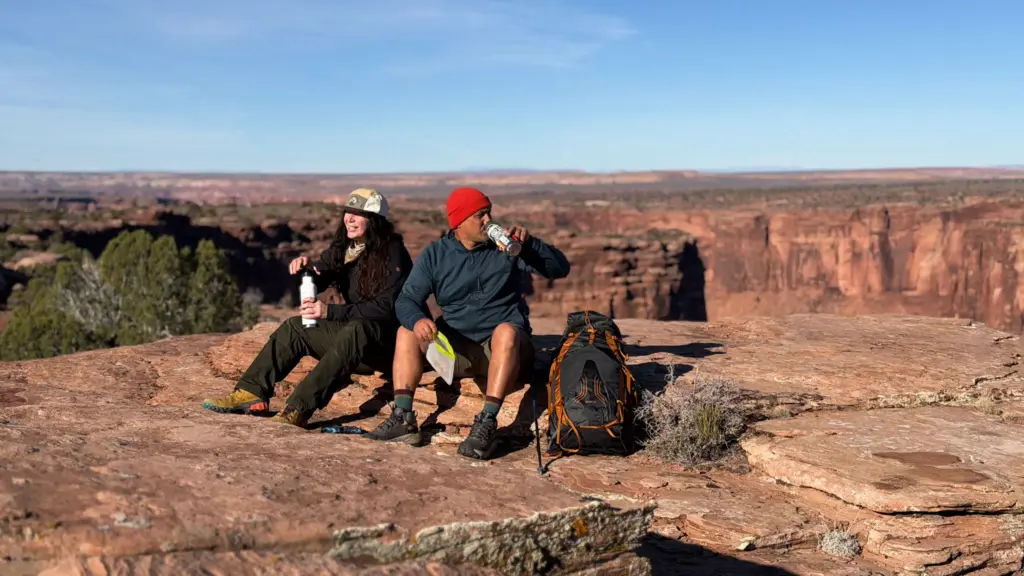
What started as a road trip debate about toilet paper turned into a career rooted in our love for the outdoors. Before we were a Subaru/Leave No Trace Traveling Team, we were just two people on a road trip across Colorado. Our days were stacked with backpacking, long trail miles, and camping. And like any good road trip, there were plenty of hours logged in the car.
We were hoping for answers on a hot topic: toilet paper. Pack it out or bury it in a cathole? We needed answers, so we found a podcast featuring someone who was Leave No Trace certified. By the end of the episode, we were fully invested.
To pass the rest of the drive, we decided to memorize all 7 principles. We quizzed each other. Repeated them out loud. Many attempts to get them in order without messing up.
Three weeks later, while scrolling through social media we saw a post about a job opening as a Subaru/Leave No Trace Traveling Team. We looked at each other and asked, “Should we?” And then, “Hell Yeah!”
We applied. Four weeks later, after multiple interviews, we were offered the dream job.

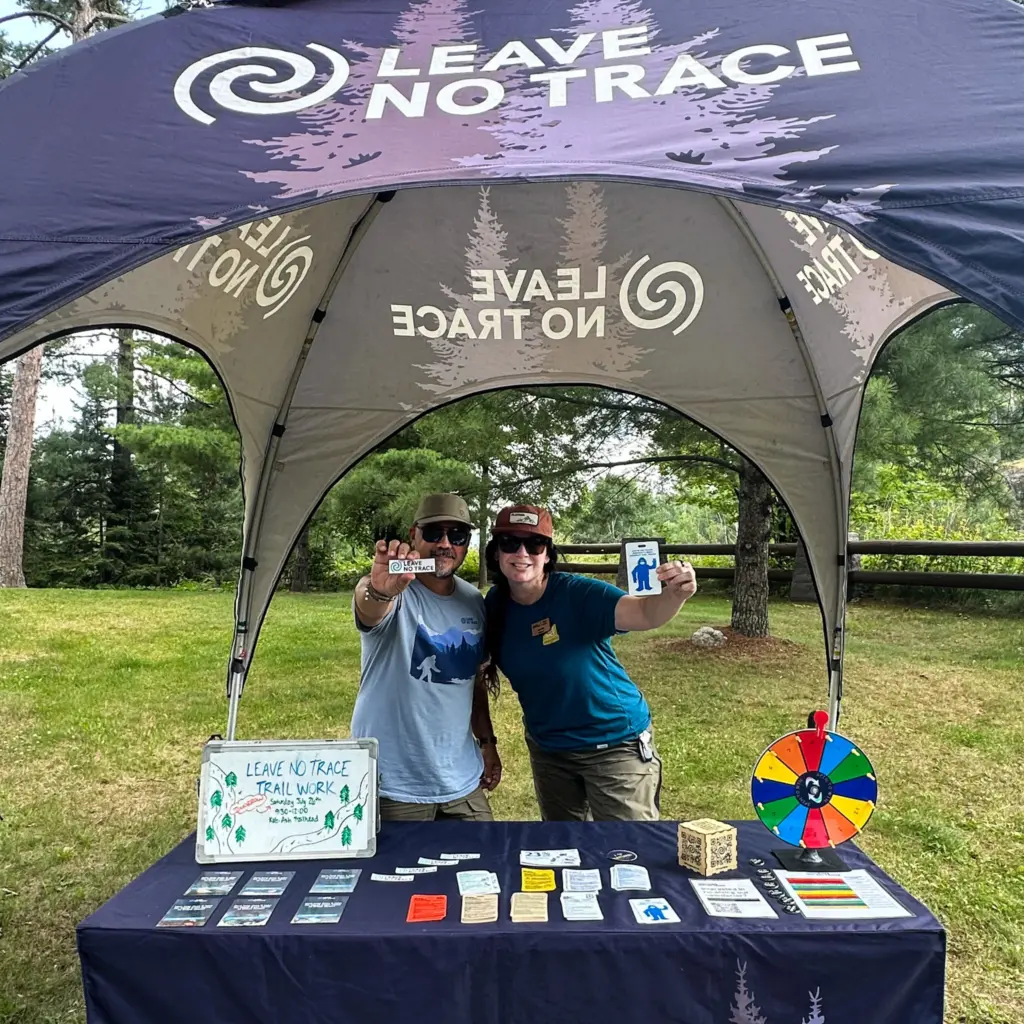
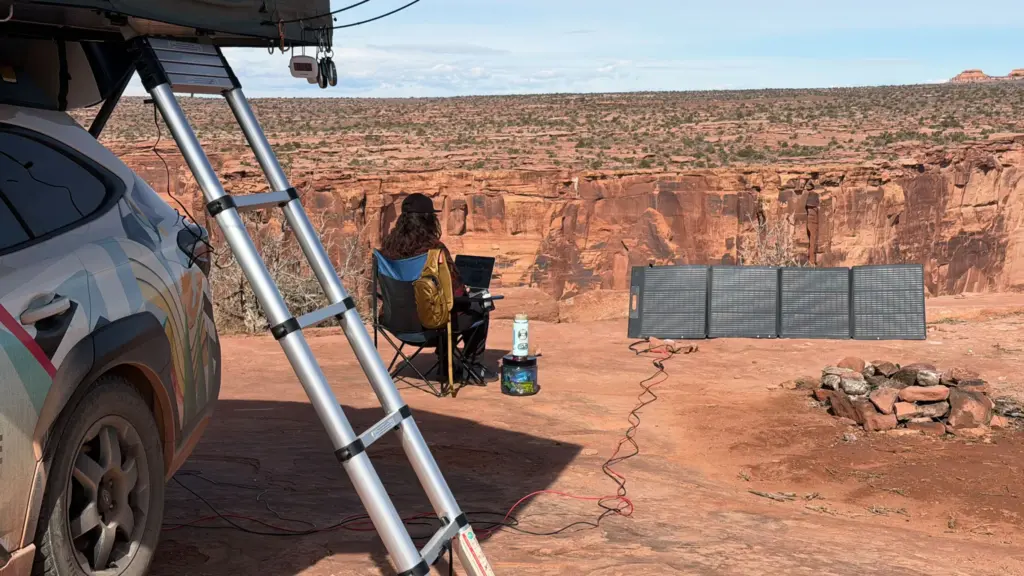
Full circle, in the best way. What started as a road trip debate about pooping in a cathole and what to do with the TP, turned into a career rooted in helping others care for the outdoors. Not bad for a podcast we played just to win a debate.Now, as a Subaru/Leave No Trace Traveling Team, we spend 11 months traveling coast-to-coast out of a Subaru Outback, and sleeping in a roof top tent. We are the education arm of Leave No Trace, and educate practical and actionable ways people can lessen their impact while enjoying the outdoors. Our work takes us on the road in the form of training, workshops, outreach events, and hands-on stewardship projects. Leave No Trace empowers people to protect the places they love while recreating responsibly.

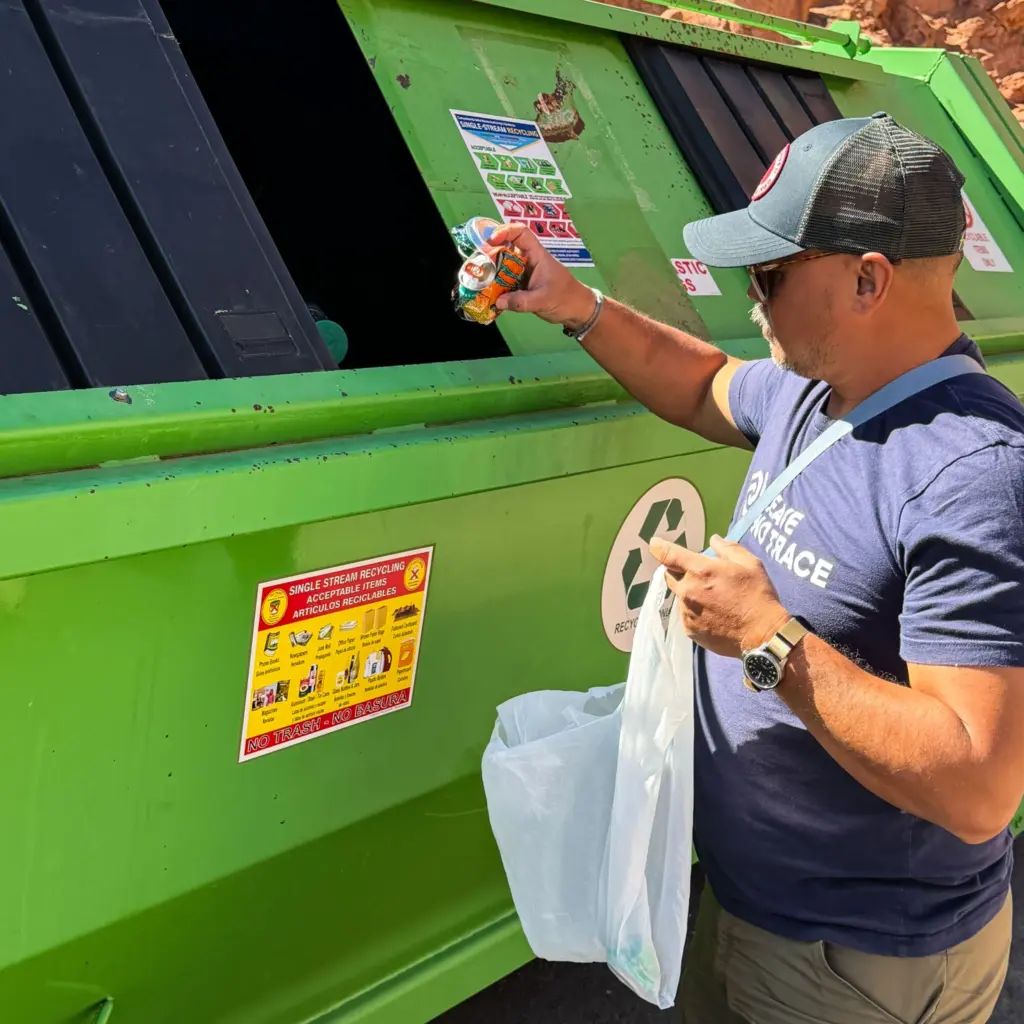
Living the Leave No Trace lifestyle isn’t something we switch on only during programs. Once you understand how everyday actions affect the ecosystems around you, it naturally starts to shape your daily choices. Whether we are traveling between events or intentionally unplugging to recharge through hiking or backpacking, we’re usually recreating on the very same public lands we teach about. One of the biggest ways this shows up in our day-to-day routine is through a few simple, practical decisions: we avoid single-use items whenever possible and we lean hard into durable, reusable gear.
Camping 160+ Days Across 23 States
Our gear is vital, and used constantly. Last year, we camped over 160 days in 11 months. We don’t have a fancy gear room. No wall of perfectly hung packs. No labeled bins. Our Subaru is our home, and every inch inside has a purpose. If a new item earns a spot in our car, that means something else must be demoted and needs to be gifted away. This gear is hauled into classrooms and onto trails. They get shoved in tight spaces and pulled back out at the next classroom or camp. Everything takes a beating not only from miles on dirt, but from being squeezed and stacked in a vehicle that doubles as our home and office.


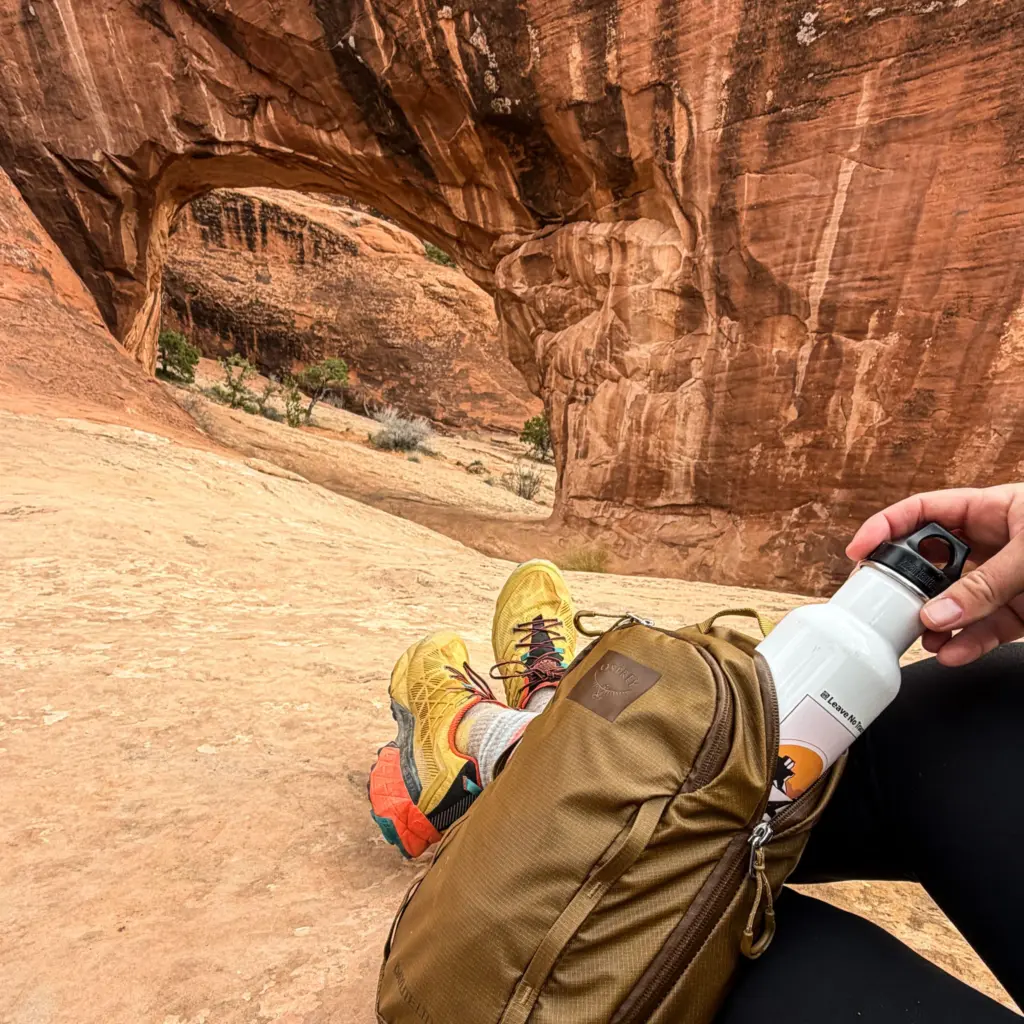
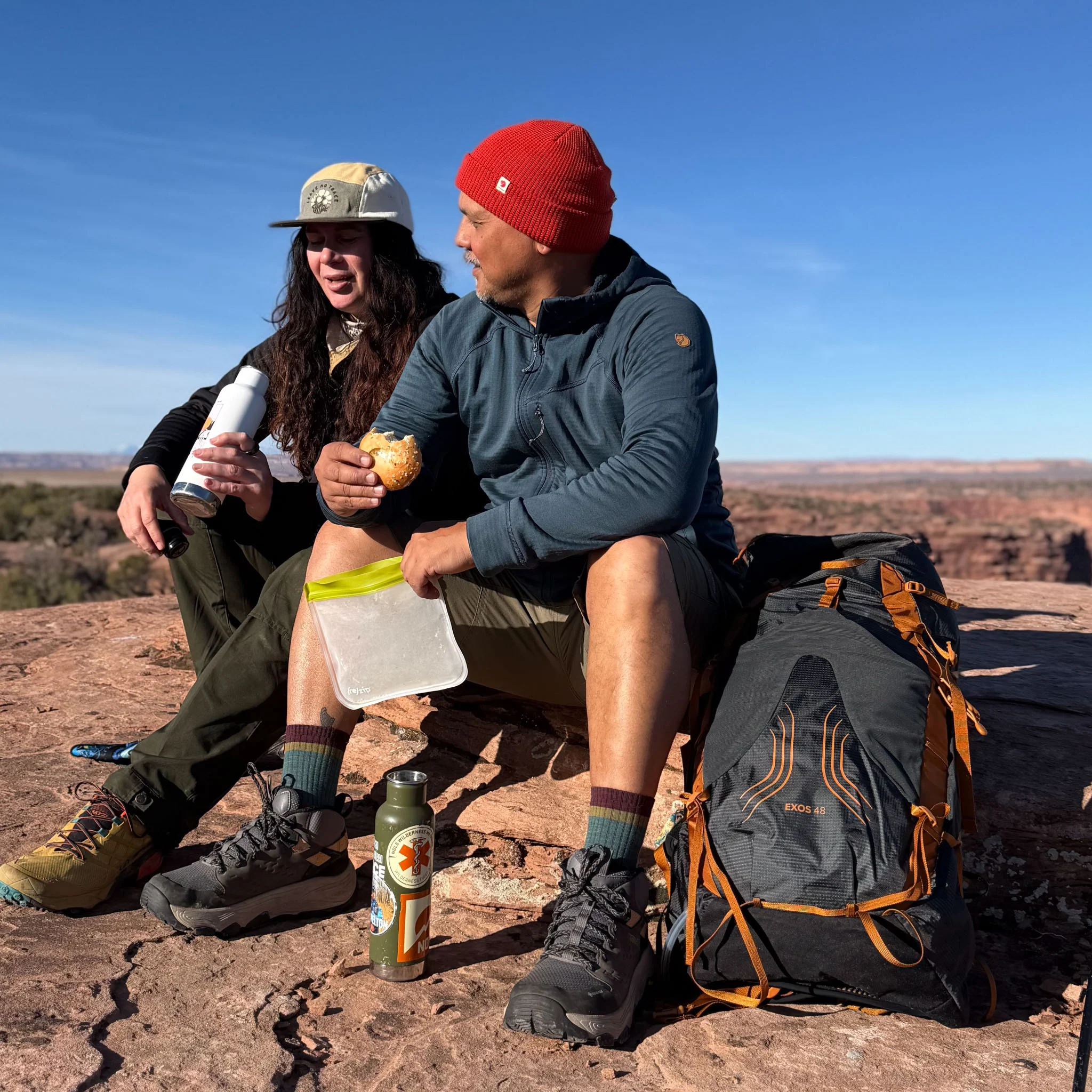
Living this way has changed how we think about space and waste. There is no room for duplicates that do the same job. No space for gear that falls apart after one season. The same goes for daily waste. Our go-to items are disposable water bottles, reusable cutlery, strong reusable bags, containers, and coffee mugs. Swapping single-use items for things that can survive thousands of miles instead of a single afternoon. Fewer throwaway products. Less waste to manage at the end of the day.
Food Systems That Actually Work on the Road
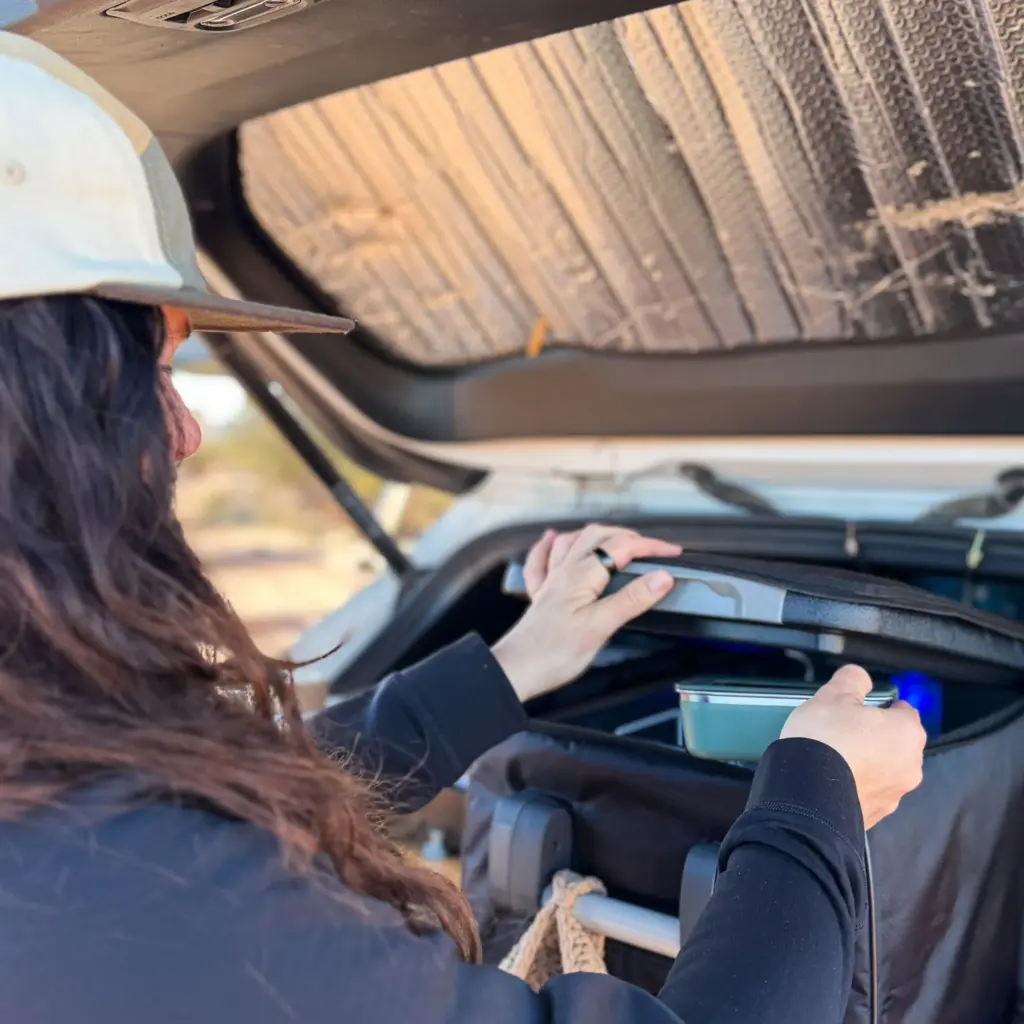
When the bottom of your cooler turns into a batch of mystery soup, you know it’s time for an upgrade. Life on the road demands a food system that is simple and dependable, and just as important, one that keeps trash from stacking up in the car while we hunt down the next dumpster.
For the past two years living on the road, switching from a traditional cooler to an electric one has been a game changer. Eliminating buying ice and the inevitable plastic bag that comes with it has been life changing. Tag team the electric cooler with reusable food containers and tough, reusable bags is our secret weapon. We prep meals ahead, save leftovers, and dodge the mountain of single-use packaging that comes with eating on-the-go. Restaurant leftovers come home with us every time. We bring our containers and skip the styrofoam and flimsy cardboard that is meant for the landfill.

Bonus: the reusable metal food containers are air-tight, and actually protect our food. No crushed sandwiches. No mysterious cooler soup sloshing around. Everything stacks neatly, stays sealed, and survives the drive to the next campsite.
For us, this is what living Leave No Trace looks like in real life. Figuring out what practical systems work for us. It’s about practice, not perfection. It’s gear that has multiple uses when we are teaching, hiking, or grabbing that gas station burrito between programs.
Durable Gear For the Long Haul
Backpacking strips life down to essentials. You plan smart, and perhaps, add a few luxuries. You carry only what you need. You rely on what you bring. That perspective follows us back to the car and into our programs. Plan ahead and pack intentionally.

You don’t need to change everything overnight. Start small. Swap one single-use item for something reusable. Refuse cutlery and pack a set in your bag. Doing research goes a long way. If possible, invest in gear built to last.
For us, it still traces back to that debate in the car. A simple question about toilet paper led to a career, thousands of miles on the road, and a daily commitment to traveling thoughtfully. Whether we are teaching in a city park or hiking deep in the backcountry, the goal is the same: reduce impact, carry intentional items, and leave the place just as beautiful for whoever comes next.

This post was written by Jeanelle Soland and Rob Pelton, the Leave No Trace Traveling Team. It originally appeared on Osprey.com.