A pesca no gelo é uma tradição de inverno muito apreciada, que proporciona momentos de tranquilidade ao ar livre e uma ligação mais profunda com os nossos espaços naturais. Embora o gelo seja temporário, o nosso impacto não o é. O que deixamos para trás no gelo acaba frequentemente na água assim que o degelo começa, afetando a qualidade da água, as populações de peixes, a vida selvagem e a experiência de outras pessoas. A aplicação dos princípios da ética «Leave No Trace» durante a pesca no gelo ajuda a proteger os recursos pesqueiros e garante que estes locais permaneçam saudáveis e acolhedores muito depois do fim do inverno.
Os 7 Princípios do Leave No Trace vão além de orientações gerais para atividades ao ar livre. Quando adaptados à pesca no gelo, oferecem medidas concretas que ajudam a manter os lagos saudáveis durante o inverno e muito para além do fim do período de gelo.
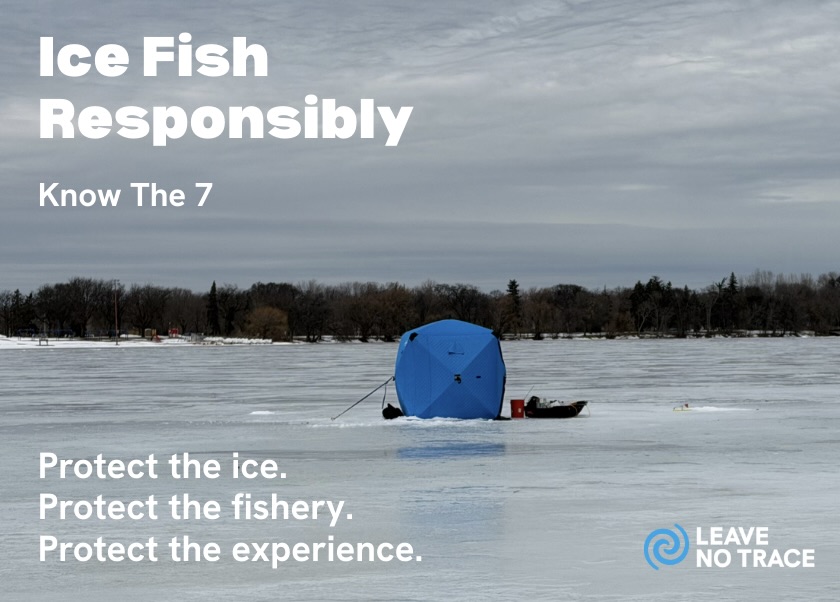
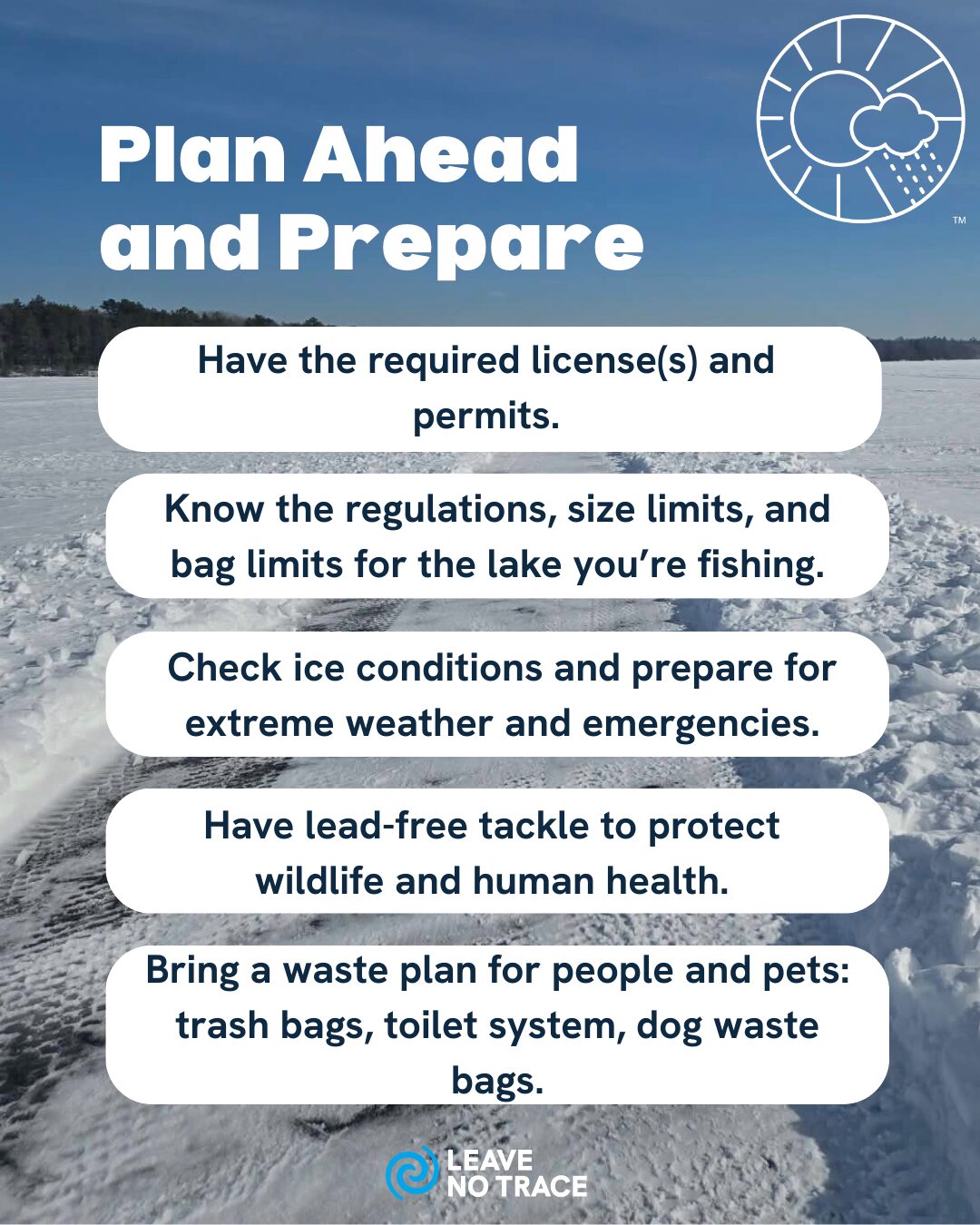
Planear com antecedência e preparar
O planeamento antecipado é a base de uma pesca no gelo responsável. Antes de partir, os pescadores devem certificar-se de que possuem as licenças e autorizações de pesca necessárias e que compreendem os regulamentos específicos, os limites de tamanho e os limites de captura para o lago onde vão pescar. Estas regras variam consoante o estado e o corpo de água e destinam-se a proteger as populações de peixes e os ecossistemas aquáticos.
Deve-se sempre verificar as condições do gelo e as condições meteorológicas antes de se aventurar em águas congeladas. A espessura do gelo pode variar consideravelmente ao longo de um mesmo lago, e as mudanças de temperatura podem afetar rapidamente a segurança. Utilize ferramentas como uma barra de sondagem para sondar e fazer buracos de teste, a fim de verificar a profundidade e a resistência do gelo antes de pisá-lo, especialmente no início da formação do gelo, quando as condições podem ser imprevisíveis.
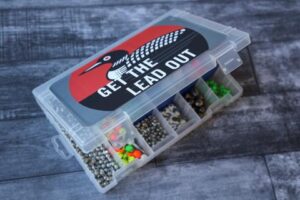
A utilização de equipamento de pesca sem chumbo é uma escolha simples que salva a vida selvagem. O chumbo é altamente tóxico e estima-seque 25 % das mortes de mergulhões-comuns adultos em todo o país sejam causadas por envenenamento por chumbo devido à ingestão de equipamento de pesca, o que muitas vezes resulta em mortes lentas e dolorosas. A mudança para equipamento sem chumbo também protege águias, cisnes, mamíferos e pessoas, mantendo os lagos mais saudáveis para todos.
Ter um plano de gestão de resíduos para lixo, depravos humanos e de dejetos de animais de estimação é fundamental para preservar a saúde dos nossos espaços naturais. Levar sacos de lixo, um sistema de sanitário portátil para depravos humanos e sacos para recolher os dejetos dos cães evita que os resíduos sejam abandonados no local. Planear com antecedência protege as populações de peixes, garante a segurança dos pescadores e dos seus acompanhantes e evita impactos que poderiam ser evitados.
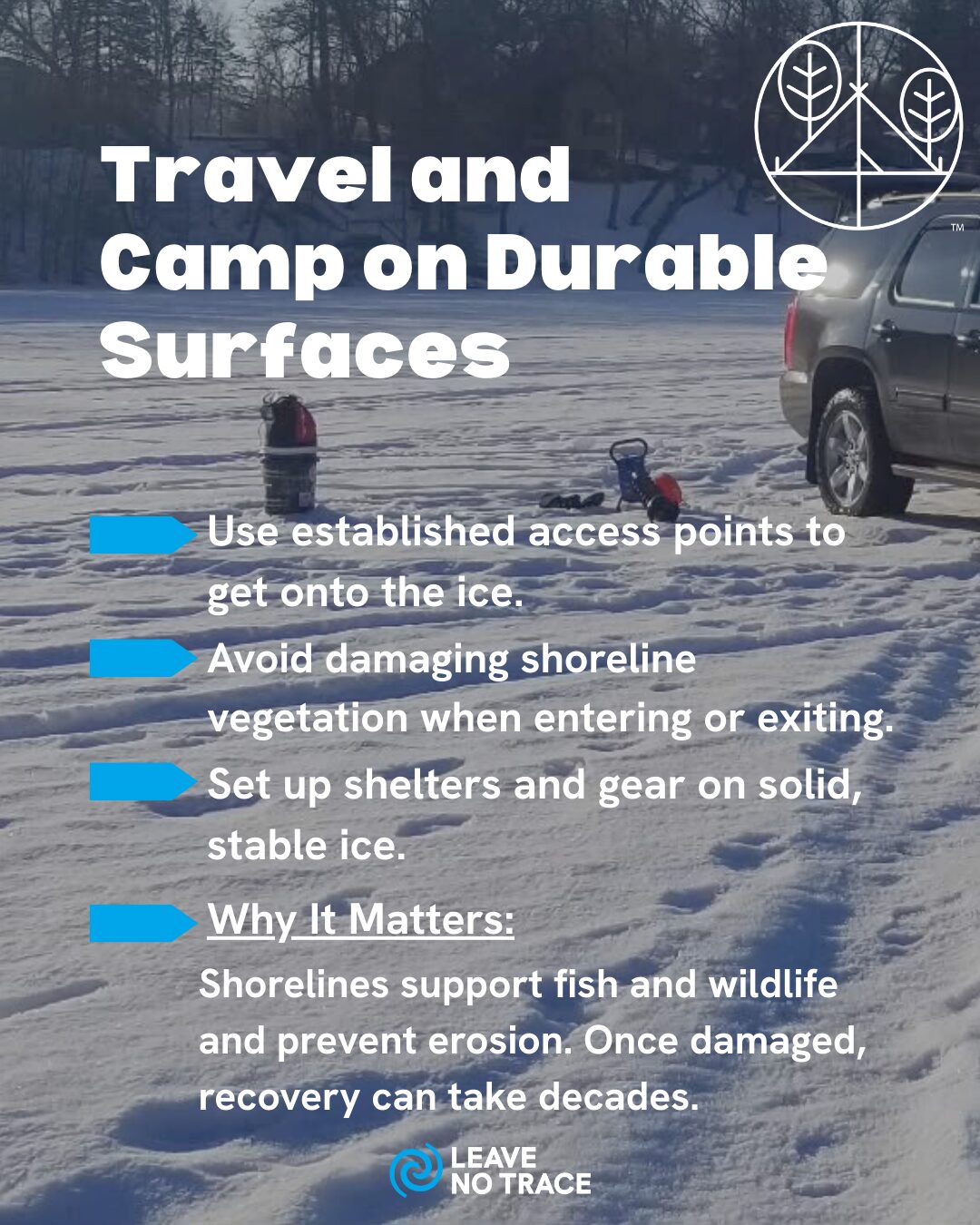
Viajar e acampar em superfícies duradouras
Deslocar-se e instalar-se em superfícies resistentes ajuda a minimizar os danos nas margens frágeis. Devem ser sempre utilizados os pontos de acesso estabelecidos ao entrar ou sair do gelo. Atravessar a vegetação ribeirinha ou solos soltos pode causar erosão que perdura muito tempo após o fim do inverno. As zonas ribeirinhas constituem um habitat essencial para peixes, insetos e animais selvagens, que demoram a recuperar após o degelo. Os abrigos e o equipamento devem ser colocados sobre gelo sólido e estável, e deve ter-se cuidado ao mover o equipamento perto da costa.
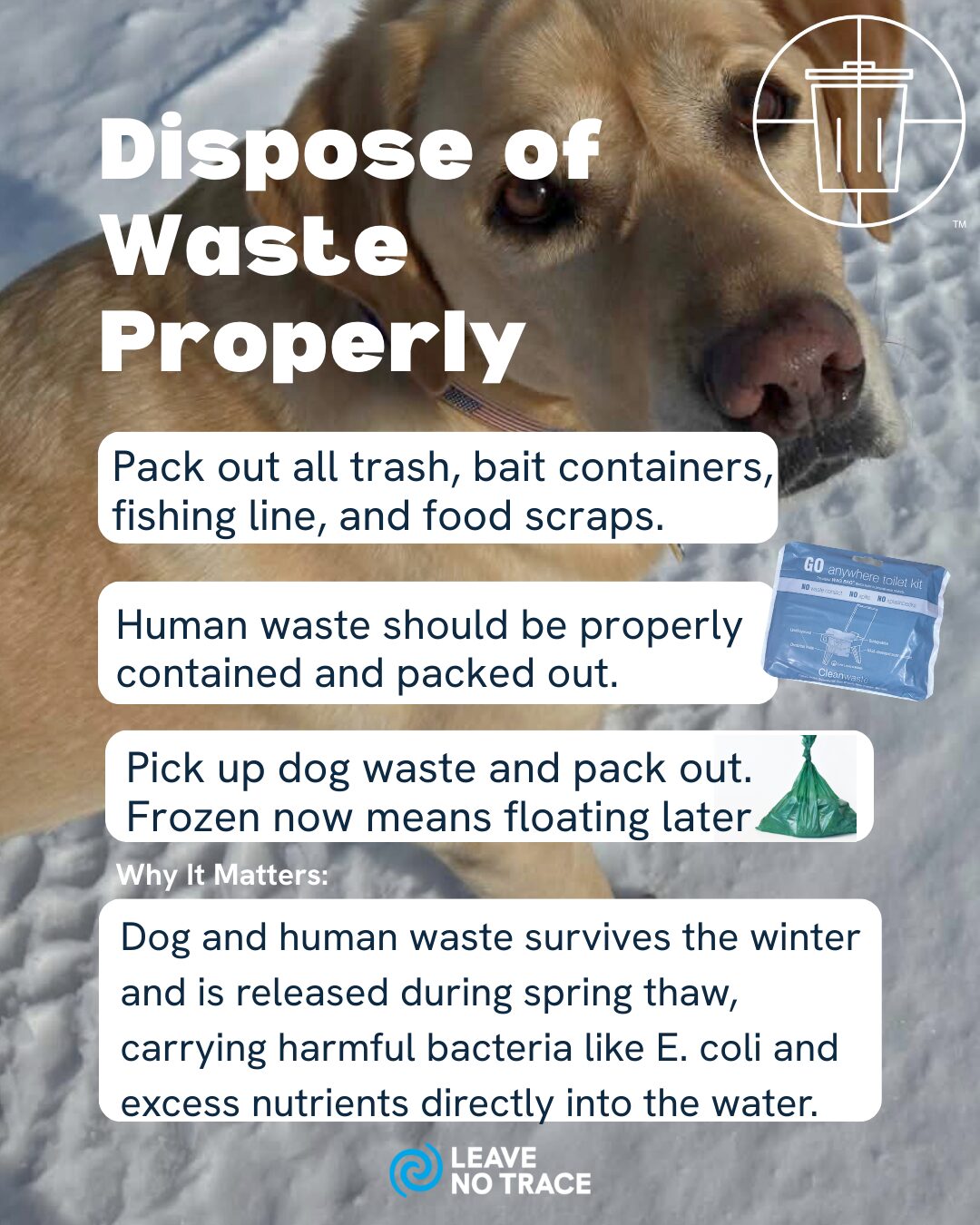
Eliminar corretamente os resíduos
A eliminação adequada dos resíduos é uma das formas mais importantes de proteger os lagos durante a época de pesca no gelo. Todo o lixo, incluindo restos de comida, iscos e embalagens de iscos, bem como linhas de pesca, deve ser levado de volta.
 Os dejetos humanos devem ser devidamente acondicionados, por exemplo, num sistema de saco duplo biodegradável, e levá-los na mala juntamente com papel higiénico e toalhitas. Para reduzir o consumo de papel higiénico, use um pano reutilizável para a urina. Quando o gelo derrete, os resíduos humanos chegam ao lago, introduzindo agentes patogénicos como a E. coli e um excesso de nutrientes, tais como azoto e fósforo, que prejudicam a qualidade da água, favorecem a proliferação de algas e prejudicam os peixes, a vida selvagem e as pessoas.
Os dejetos dos cães também devem ser recolhidos e levados embora. Embora possam congelar rapidamente, não desaparecem. Quando o gelo derrete, os dejetos dos animais de estimação libertam bactérias, como a E. coli, e nutrientes em excesso na água, contribuindo para a poluição e para potenciais riscos para a saúde. O que fica no gelo acaba por ir parar ao lago.
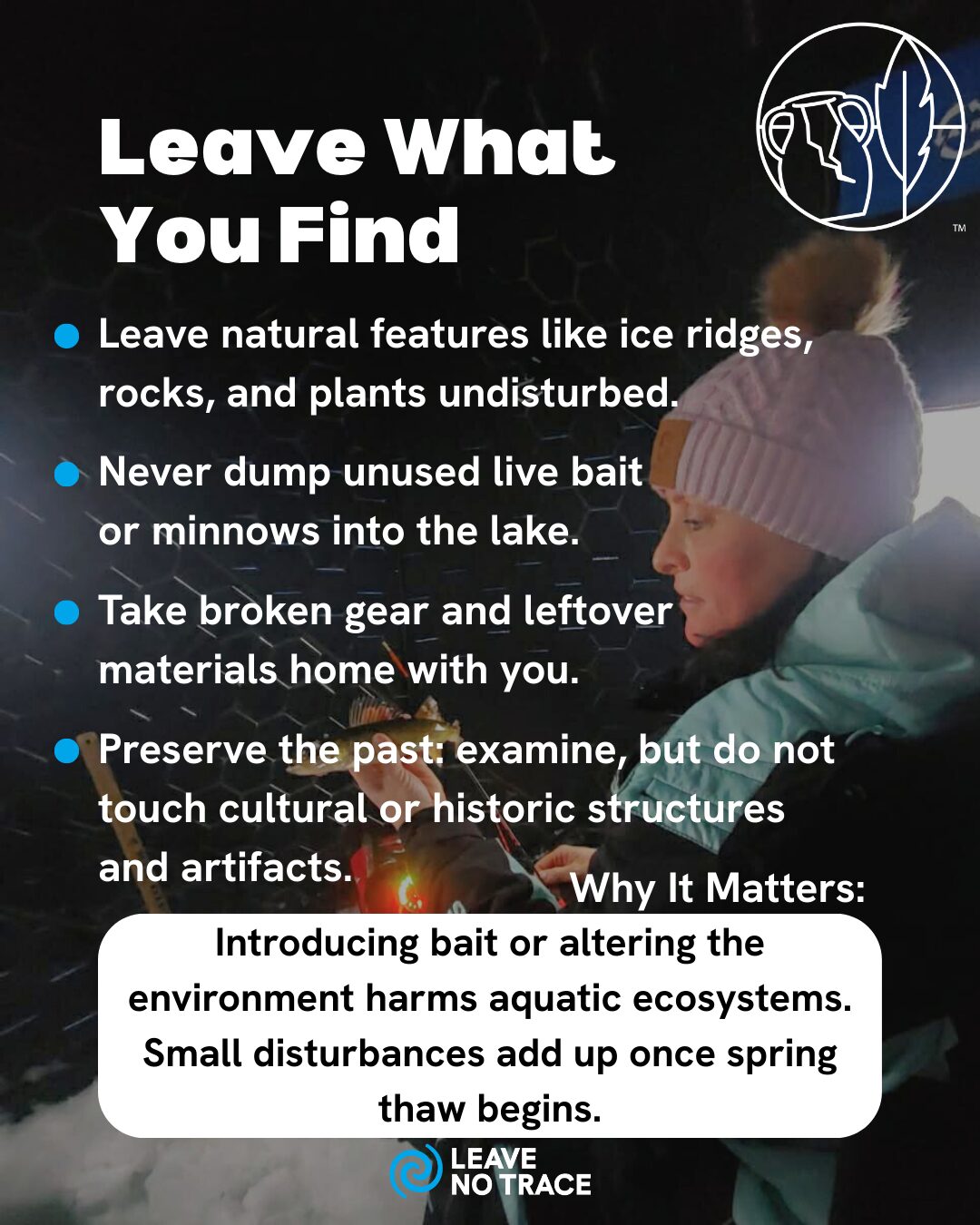
Deixar o que encontrar
Deixar no local o que encontrar ajuda a manter os ecossistemas aquáticos equilibrados e resilientes. Elementos naturais, como cristas de gelo, rochas e vegetação ribeirinha, devem permanecer intactos. Mesmo em condições de congelamento, as espécies invasoras podem propagar-se; por isso, iscas vivas não utilizadas, água com iscas e peixinhos nunca devem ser despejados no lago, pois podem introduzir espécies invasoras e/ou doenças. Deite fora as iscas indesejadas no lixo para evitar estes impactos. Equipamento partido, resíduos e material não utilizado também devem ser levados consigo. Pequenas perturbações causadas durante o inverno podem ter efeitos desproporcionados assim que o degelo da primavera permitir que os materiais se desloquem livremente para a água.
Minimizar o impacto da fogueira
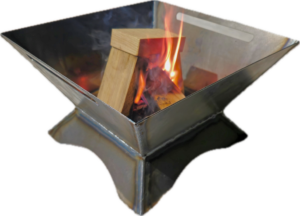
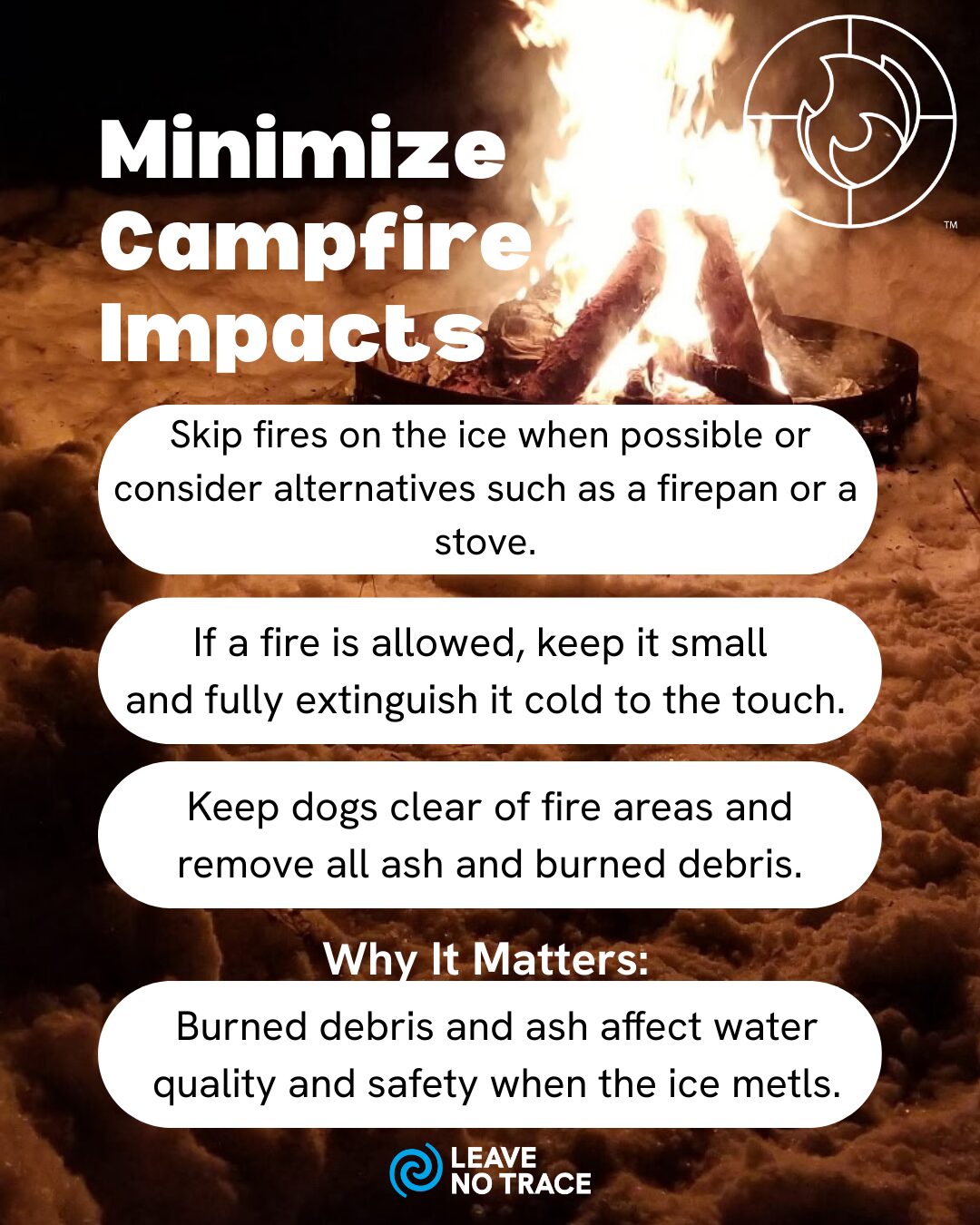
Sempre que possível, deve evitar-se fazer fogueiras no gelo. Considere alternativas,como umabraseira ou um fogão portátil. As alternativas constituem uma opção mais limpa e segura para cozinhar e aquecer-se. Se for permitido acender fogueiras, estas devem ser pequenas e completamente extintas, ou seja, frias ao toque. Todas as cinzas e detritos queimados devem ser recolhidos e levados embora. Os materiais queimados não desaparecem quando o gelo derrete e podem afetar negativamente a qualidade e a segurança da água. Minimizar o impacto das fogueiras protege tanto o lago como as pessoas e os animais de estimação que o frequentam.
Respeitar a vida selvagem
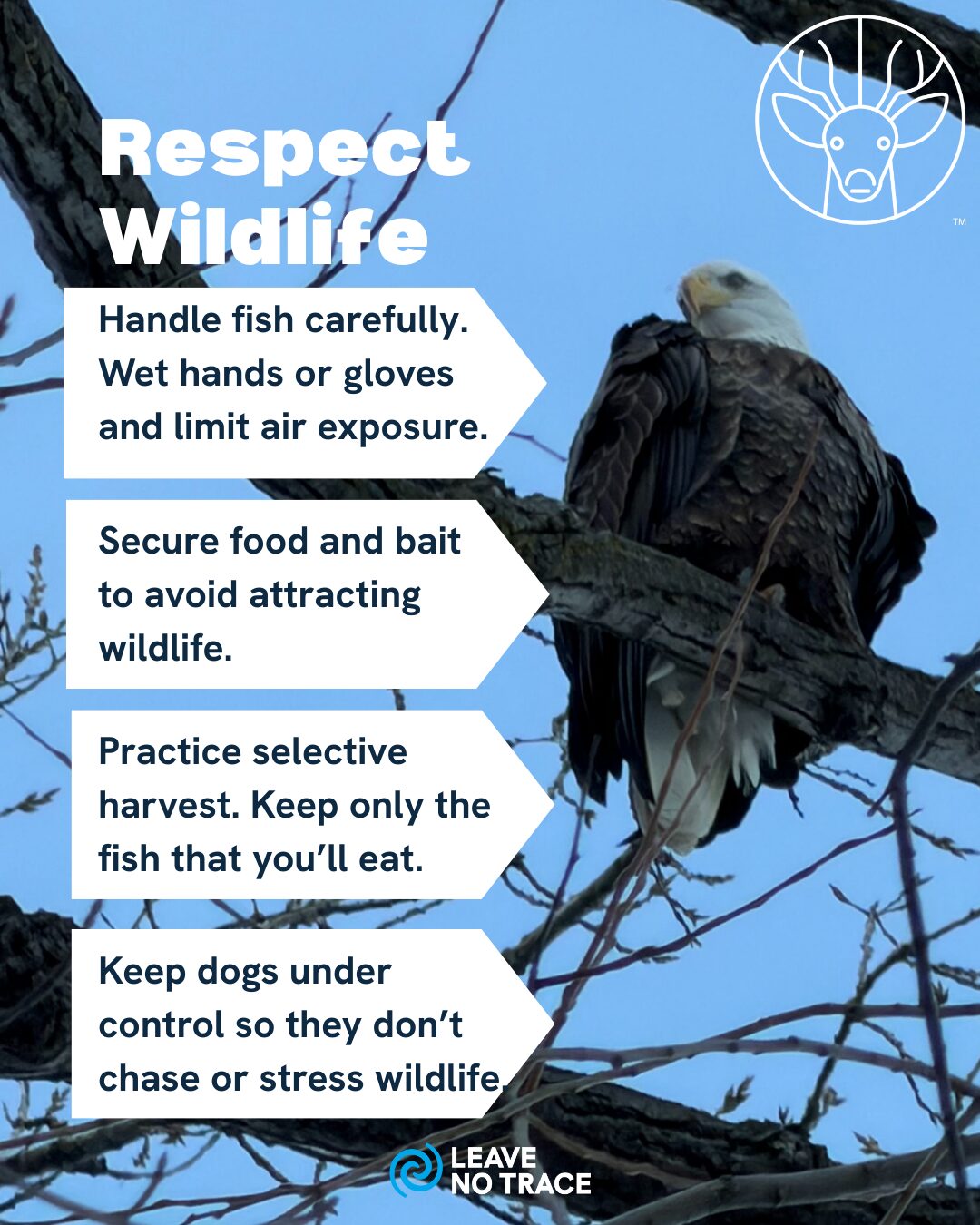
Respeitar a vida selvagem é especialmente importante durante o inverno, quando as temperaturas baixas e a escassez de alimentos já levam os animais ao limite. Os peixes devem ser manuseados com cuidado, com as mãos molhadas ou com luvas, e expostos ao ar o menor tempo possível, uma vez que o ar frio pode danificar as brânquias e os olhos. Praticar a captura seletiva, ficando apenas com o que se pretende comer, ajuda a manter populações de peixes equilibradas e saudáveis, que sustentam todo o ecossistema aquático.
Os cães devem ser mantidos sob controlo para que não persigam nem perturbem a vida selvagem. No inverno, mesmo perturbações de curta duração obrigam os animais a gastar reservas de energia essenciais à sua sobrevivência, aumentando o risco de lesões ou morte. Minimizar as perturbações ajuda a vida selvagem a conservar energia, protege as relações naturais entre predadores e presas e contribui para a estabilidade do ecossistema durante a estação mais rigorosa do ano.
Ter consideração pelos outros
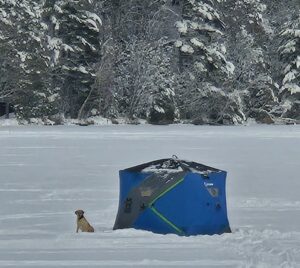 A pesca no gelo realiza-se frequentemente em espaços partilhados, e as escolhas individuais podem afetar todos os que se encontram no gelo. Muitas autoridades estaduais responsáveis pela pesca mantêm estradas limpas de neve nos lagos para garantir a segurança dos deslocamentos, pelo que é fortemente desaconselhado fazer furos nessas estradas. Os furos podem causar inundações nessas estradas, criar lama perigosa e obrigar a desvios dispendiosos. Fazer furos perto de cabanas de pesca permanentes também pode inundar áreas inteiras, congelar as estruturas no local e, consequentemente, tornar a sua remoção difícil ou insegura. Dê espaço aos outros, evite perfurar perto de outras instalações e respeite os limites.
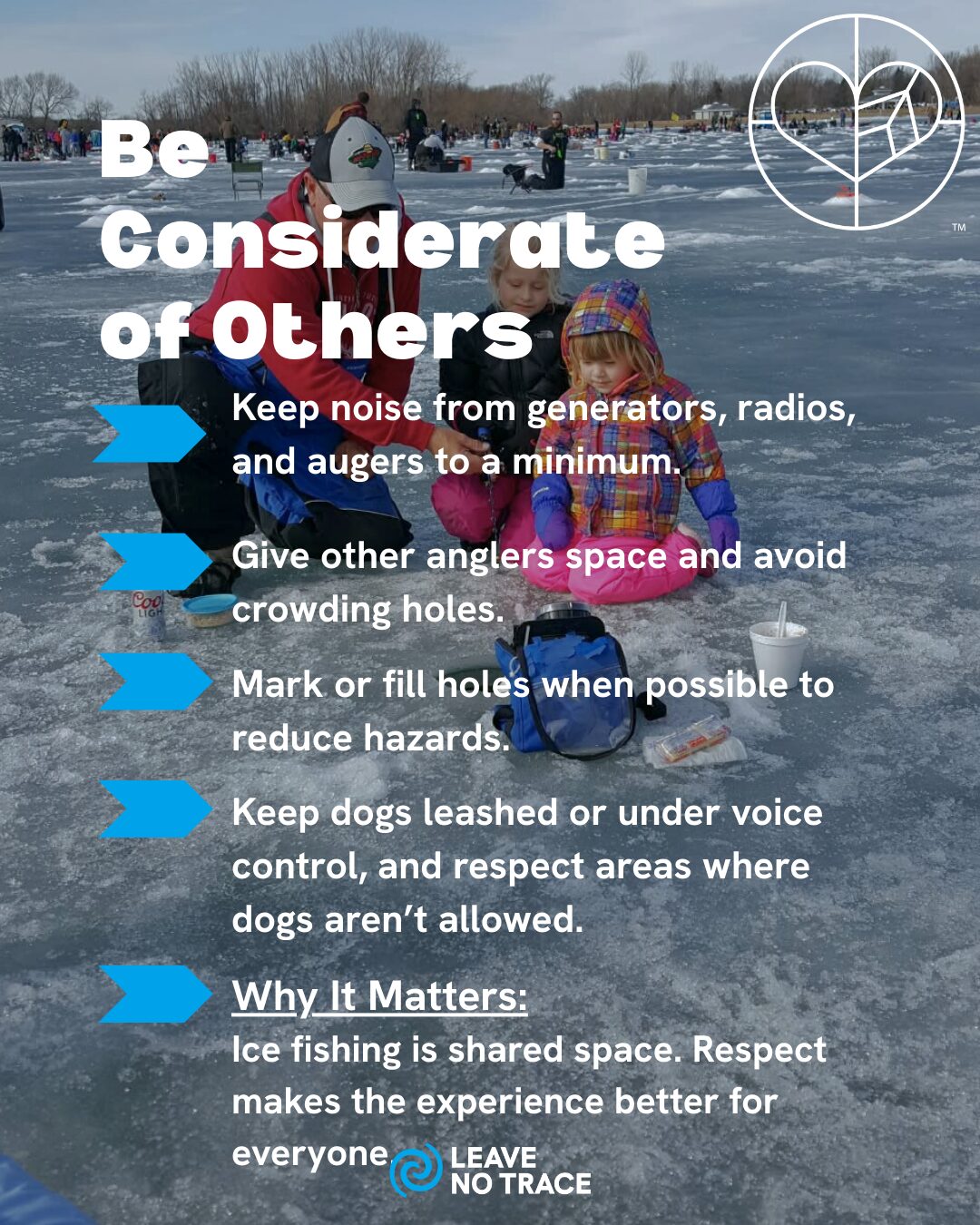
Ser atencioso com os outros significa também reduzir ao mínimo o ruído de geradores, rádios e brocas, especialmente em zonas de grande afluência. Marque ou preencha os buracos sempre que possível, para reduzir os riscos para as pessoas, animais de estimação e vida selvagem. Mantenha os cães com trela ou sob controlo vocal fiável e respeite as restrições afixadas. Ao circular em estradas de gelo, reduza a velocidade. O tráfego repetido de veículos e a velocidade excessiva podem danificar prematuramente o gelo. Um pouco de paciência e atenção contribuem muito para manter a pesca no gelo segura, agradável e acolhedora para todos.
Pesca no gelo ao estilo «Leave No Trace»
A pesca no gelo sustentável implica pensar para além da captura de hoje. O que deixamos no gelo acaba por se refletir mais tarde na água, nos recursos haliêuticos e na experiência de outras pessoas. Ao seguir os 7 princípios do «Leave No Trace», os pescadores podem proteger o gelo, proteger os recursos haliêuticos e proteger a experiência das temporadas futuras.