
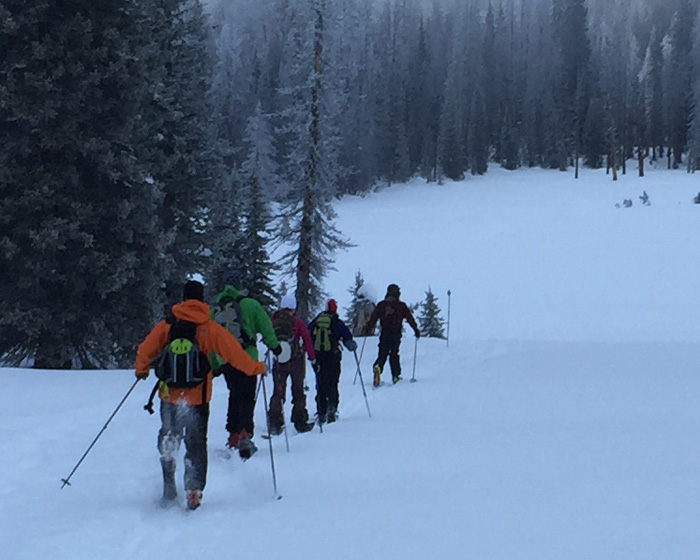
C'est en hiver que l'appel de la montagne est le plus fort. La neige fraîchement damée, l'air froid et cette sensation familière des carres qui mordent la neige contribuent à faire du ski et du snowboard des expériences de plein air inoubliables. Mais comme pour toute saison de loisirs, l'hiver s'accompagne d'une responsabilité : profiter de la montagne sans aggraver la pression environnementale à laquelle elle est déjà soumise.
En combinant des conseils fondés sur des données scientifiques et des gestes concrets au quotidien, nous pouvons contribuer à préserver la santé et la résilience des paysages hivernaux, tant sur les pistes qu’en dehors.
Le choix de votre cire a un impact sur la nature
Voici un aspect auquel la plupart des skieurs et des snowboardeurs ne pensent jamais.
Les farts traditionnels pour le ski et le snowboard — en particulier les farts fluorés — contiennent depuis toujours des PFC et des PFAS, des substances chimiques persistantes associées à la pollution des cours d'eau, des eaux de ruissellement issues de la fonte des neiges, des sols et, à terme, de la chaîne alimentaire. Ces « substances chimiques éternelles » ne restent pas en place : elles sont raclées sur les pistes, se dispersent pendant la pratique du ski ou du snowboard, puis finissent par se retrouver dans l'environnement.
Cela pose de réels problèmes :
- Substances chimiques persistantes dans le manteau neigeux alpin
- Contaminated wax debris in parking lots<
- Problèmes à long terme liés à la qualité de l'eau dus à l'écoulement des eaux de fonte vers les basses altitudes
- Rencontre avec des techniciens spécialisés dans le fartage, des préparateurs de ski de compétition et des professionnels du ski
De nombreuses stations de ski et fédérations de ski ont déjà interdit les farts fluorés, et ce à juste titre. Mais les skieurs amateurs continuent souvent de choisir ce qui leur semble être l’option la plus rapide, sans se soucier de l’endroit où ce fart finit par se retrouver.
Ce que vous pouvez faire
Opter pour une cire écologique est l'un des moyens les plus simples de réduire votre empreinte écologique en hiver :
- Recherchez des formules biodégradables, à base de plantes ou sans fluor, comme celles proposées par mountainFLOW
- Achetez de la cire auprès d'entreprises qui publient des normes en matière de développement durable
- Évitez complètement les farts fluorés (de compétition ou de loisir)
- Ne laissez pas de résidus dans les parkings : ramassez-les et jetez-les dans les poubelles prévues à cet effet
La cire écologique est-elle moins performante ? Pas vraiment. Les cires végétales modernes ont comblé leur retard en termes de performances, et pour un usage récréatif, la différence est négligeable sur le plan fonctionnel. L'avantage environnemental, en revanche, ne l'est pas.
Choisir une cire respectueuse de l'environnement est un excellent premier pas vers une pratique plus durable du ski et du snowboard. Poursuivez votre lecture pour découvrir d'autres conseils inspirés du principe « Ne laissez aucune trace ».
Votre journée à la neige commence chez vous
La plupart des skieurs savent que la préparation est essentielle : bulletins d’enneigement, risques d’avalanche, vérification du matériel, fenêtres météo et moyens de transport. Le principe « Ne laissez aucune trace » ne fait que prolonger cette approche :
- À savoir avant de partir : familiarisez-vous avec le réseau de pistes, les règles applicables en hors-piste et les consignes de la station.
- Vérifiez les fermetures saisonnières : les fermetures liées à la faune, les mesures de protection des terrains en début de saison et les zones d'habitat sensibles sont importantes.
- Pensez aux moyens de transport : privilégiez le covoiturage, le bus ou les services de transport partagé lorsque c'est possible. Moins de voitures sur les routes de montagne, c'est moins d'embouteillages, moins d'émissions polluantes et des déplacements plus sûrs.
Un peu de préparation peut faire toute la différence et permet d'éviter les décisions prises à la hâte qui entraînent la dégradation du terrain, l'interdiction d'accès à certaines zones ou la surfréquentation d'espaces fragiles.
Privilégiez les surfaces résistantes, même en hiver
La neige donne une fausse impression de solidité. En réalité, une fine couche de neige peut recouvrir une végétation fragile et des sols qui s’abîment facilement sous le poids des skis, des snowboards, des chaussures et des motoneiges.
- Dans les stations, restez sur les pistes balisées et respectez les zones fermées.
- En hors-piste, empruntez autant que possible les itinéraires balisés, les zones de neige profonde et les surfaces fermes.
- Soyez particulièrement vigilant en début et en fin de saison, lorsque la couverture végétale est faible.
En bref : si vous ne piétineriez pas cette plante en été, ne croyez pas que l'hiver la rende indestructible.
Respectez la faune hivernale
L'hiver est une épreuve de survie pour la faune sauvage. Les ressources énergétiques se font rares, les températures sont extrêmes, et toute perturbation inutile peut faire la différence entre la vie et la mort.
Les skieurs et les snowboardeurs doivent :
- Restez à bonne distance des animaux en hibernation
- Évitez de traverser des zones boisées denses où les animaux trouvent refuge
- Tenez vos chiens en laisse ou laissez-les à la maison si le règlement l'exige
- Respectez les panneaux d'interdiction d'accès installés autour des habitats et des couloirs de migration
Si nous aimons la montagne, nous devons aussi aimer ce qui y vit.
Les emballages, les sorties
La plupart des skieurs ne jettent pas leurs déchets exprès, mais des snacks, des emballages, des dos de forfaits autocollants, des sangles cassées et des plastiques à usage unique tombent sans cesse de leurs poches. Le froid incite également à utiliser des chauffe-mains, des chauffe-orteils et des petits sachets jetables, qui s'accumulent rapidement.
- Rangez vos collations et autres petits objets dans des poches à fermeture éclair
- Ne laissez pas de résidus de cire ni de déchets sur les parkings
- N'oubliez pas de ramasser les petits déchets dans la voiture et à l'hébergement
- La neige fond. Tout ce qui se trouve dessous finit par réapparaître
Laissez ce que vous avez trouvé
Le ski incite à l'exploration, et c'est une bonne chose. Mais n'oubliez pas que « l'exploration » ne signifie pas ramasser des bois de cerf, des branches, du lichen, des objets anciens ou tout autre élément naturel. Ces éléments jouent un rôle important tant pour l'équilibre écologique que pour l'expérience des autres.
Un comportement respectueux sur les pistes fait toute la différence
Les sports d'hiver peuvent faire naître un amour durable pour les paysages hivernaux. Mais l'attachement à un lieu prend tout son sens lorsqu'il se traduit par des actes concrets. Les montagnes n'ont pas besoin de perfection, mais de personnes respectueuses, informées et prêtes à adopter de simples gestes :
- Préparez-vous bien
- Restez sur des surfaces résistantes
- Respectez la faune
- Remportez tout ce que vous avez apporté
- Préservez le paysage
- Optez pour une cire durable
Plus les skieurs adopteront les principes du « Leave No Trace », plus les environnements hivernaux resteront préservés — et plus les sports d'hiver auront un avenir qui vaut la peine d'être défendu.


