
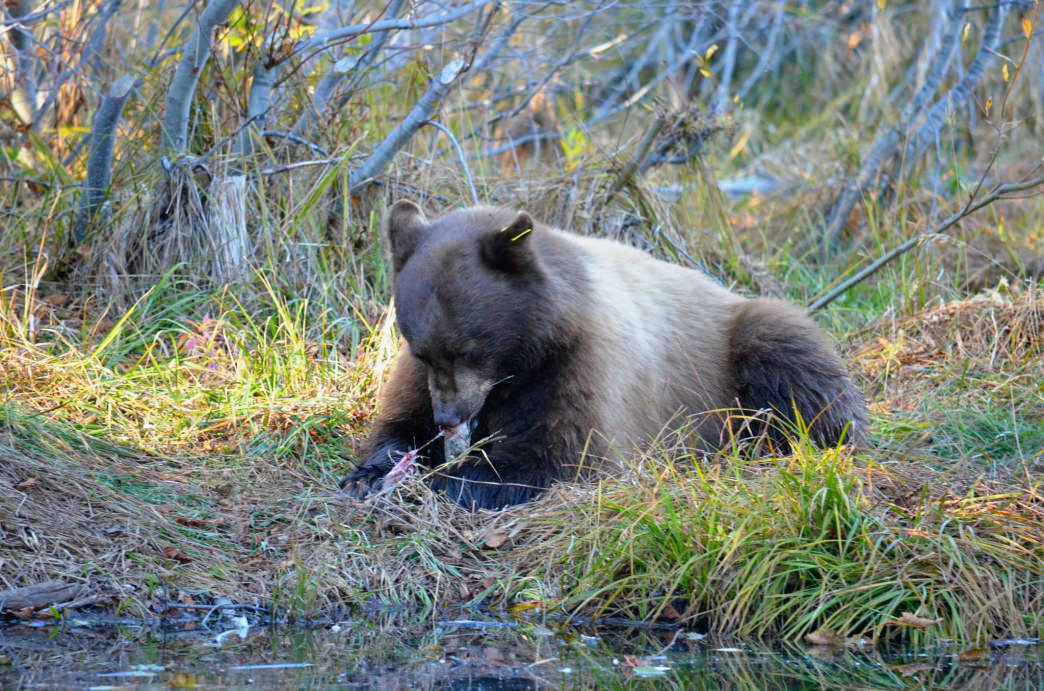
When we go over to a friend’s place for a visit, it’s generally polite to bring some snacks or refreshments. However, when visiting the homes of our wildlife friends, it’s just the opposite. Wildlife needs to eat wild things. When they get exposed to eating people food, it’s called “food conditioning,” which puts both us and them at risk.
Last week, we showed you how to hang your food and other “smellables” using the PCT Bear Hang. This week, we are showing you how to use a bear canister.
Bear canisters have a few advantages:
1. Some places don’t have adequate trees for a proper bear hang.
2. Bears aren’t the only animals wanting to get into your food. Crafty raccoons have been known to thwart bear hangs. Canisters keep these critters out too.
3. “Oh darn, I forgot to put my toothpaste away!” Now you don’t have to deal with the hassle of tying and untying the hang to get in and out of your food and other smellables.
4. They’re weatherproof.
5. Many places like Yosemite require canisters and don’t allow bear hangs.
6. They’re just quicker than setting up a hang.
So take a look here at how to use a bear canister. We highly recommend mock packing at home to make sure that all of your stuff fits inside.
We love our bears! Thanks for doing your part to help protect them.
Have Fun. Be Safe. Leave No Trace.
Leave No Trace’s Alex Roberts and Emy Gelb are part of the 2017 Subaru/Leave No Trace Traveling Trainer Program that provides free, mobile education to communities across the country. Proud partners of this program include Subaru of America, REI, Fjallraven, ENO, Deuter, Thule, Taxa Outdoors and SmartWool.


